

















Apr 07, 2026 4PM
wa la ashtari shaykhan” (and I do not buy that which is old/aged). 1. The…
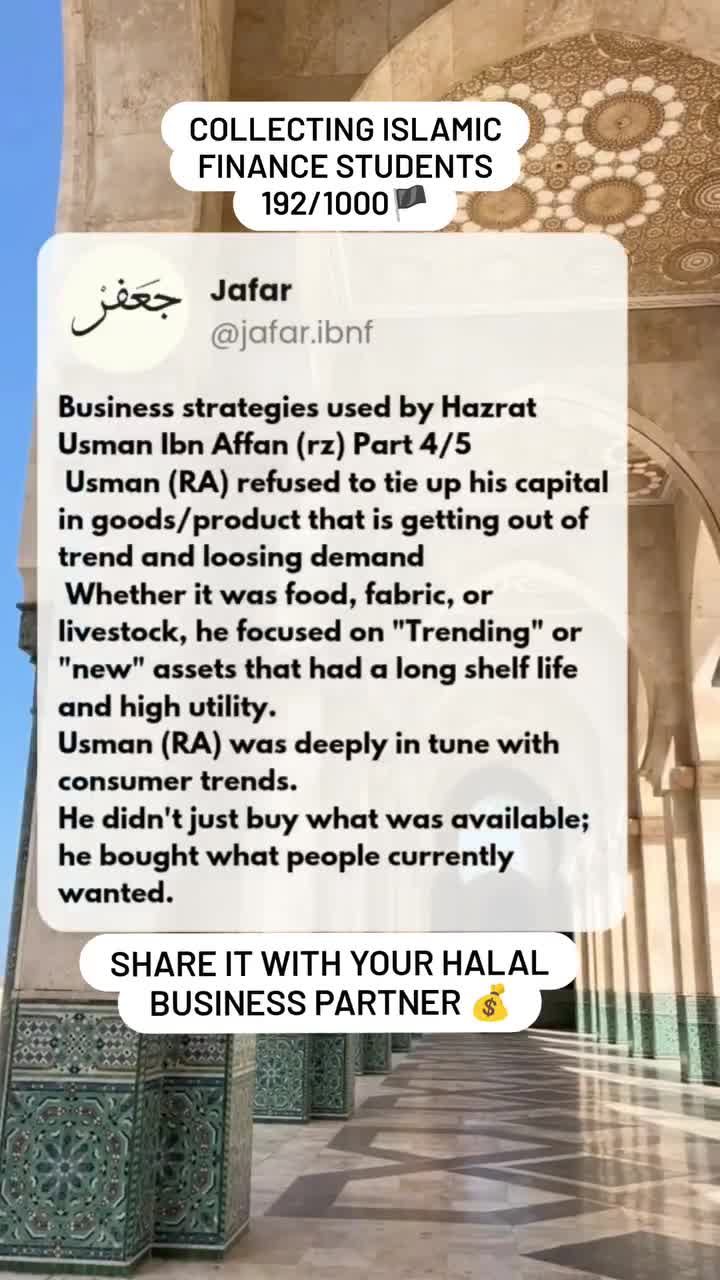
wa la ashtari shaykhan” (and I do not buy that which is old/aged).
1. The Strategy: Avoiding “Dead” Inventory
Usman (RA) refused to tie up his capital in goods that were past their prime or losing demand.
Freshness and Quality: Whether it was food, fabric, or livestock, he focused on “young” or “new” assets that had a long shelf life and high utility.
Liquidity: He knew that “old” goods are harder to sell and often require heavy discounting. By avoiding them, he kept his capital liquid—ready to be moved into the next big opportunity.
2. Market Intelligence
This principle shows that Usman (RA) was deeply in tune with consumer trends.
He didn’t just buy what was available; he bought what people currently wanted.
By rejecting “old” stock, he ensured his caravans always carried the most relevant, high-demand items for the markets in Syria, Yemen, and Madinah.
3. Risk Management
Buying “old” items (like aging livestock or outdated materials) carries a higher risk of loss due to damage, death, or further depreciation. Usman (RA) mitigated this risk by investing only in appreciating or stable assets.
Muslim
Muslims
Halal
Halal money
Halal business
Sahaba
Hadith
Salafi
Halal income
Islam
Khilafat
Shariah
#muslim #islam #halal #islamicfinance #khilafah

Cerita, bukan Berita
Stay Ahead with the Latest Halal and Islamic Updates
Waktu Solat



26 Aug 2026
Waktu solat berikutnya,
Asr
pada
16:23


Imsak
05:54:00
Fajr
06:04:00
Syuruk
07:11:00

Dhuhr
13:19:00

Asr
16:23:00

Maghrib
19:23:00

Isha
20:32:00